

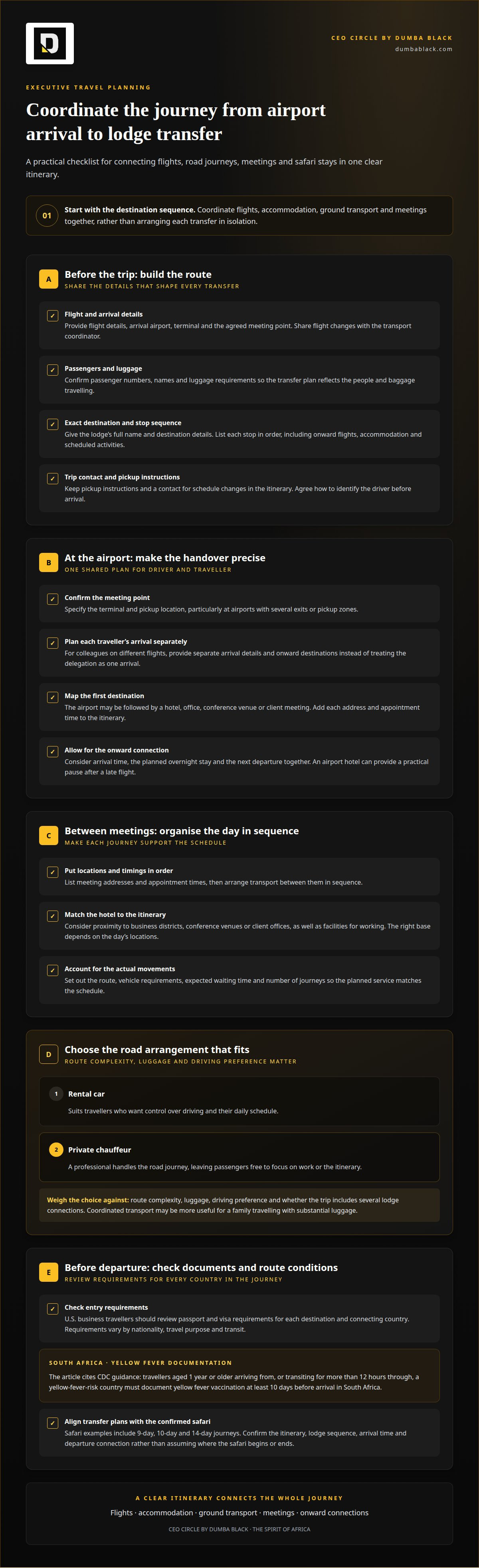
The best way to organise executive travel in Africa is to plan ground transport around the full itinerary, from airport arrival to lodge transfer and city appointments. Coordinating each connection in advance makes the journey easier to manage and avoids leaving transport decisions until arrival.
This matters when a schedule combines flights, road journeys, meetings and time at a lodge. The right arrangement depends on the route, timing, group size and luggage, so no single transport plan suits every trip. Pre-arranged journeys bring clarity to the day and let executives focus on their priorities.
This guide explains how to arrange airport pickups, safari lodge transfers, city transport and chauffeur services for executive travel in Africa. It covers what to decide before booking, how to coordinate journeys between meetings, and when a dedicated driver is a practical choice for individuals, delegations and visiting groups.
Key Takeaways
- Plan airport pickups, lodge journeys and city transport as connected parts of one itinerary, with timing, luggage and onward connections considered together.
- For transfers in major gateway cities, align the pickup plan with your arrival details and the next destination on your schedule.
- For groups, coordinate passenger numbers, meeting points and onward travel before arrival to keep the transfer organised.
- Structure transport between meetings around the day’s locations and timings, so the journey supports the schedule rather than interrupting it.
- Choose chauffeur services when pre-arranged, door-to-door transport is useful for business travel, airport connections or lodge transfers.
Airport pickups and transport to safari lodges
A safari transfer starts with the arrival airport, the lodge’s location and the next connection. Before travelling, give the transport organiser your flight details, passenger numbers, luggage requirements and the lodge’s full name. Include any onward flight or scheduled activity in the itinerary. Planning around these details helps coordinate the arrival with the next leg, rather than treating the airport journey in isolation.
U.S. business travellers should review passport and visa requirements for every country on their route. Entry conditions vary by nationality, travel purpose and transit, so assess each destination and connecting country before departure. Include passport validity, visa requirements and supporting documents in your preparations. This is especially relevant when a business visit continues into a separate safari itinerary or crosses a border.
South Africa has a yellow-fever documentation requirement for some arrivals. According to the Centers for Disease Control and Prevention (CDC), travellers aged ≥1 year arriving from or transiting for >12 hours through a yellow-fever-risk country must document yellow fever vaccination ≥10 days before arrival in South Africa. Include this requirement in pre-departure planning when the route makes it relevant.
Car rental and a private safari driver suit different preferences. A rental car gives travellers control over driving and their daily schedule. With a private chauffeur, a professional handles the road journey, leaving passengers free to focus on work or the itinerary. Choose according to route complexity, luggage, driving preference and whether the trip includes several lodge connections. For example, a family with substantial luggage may value coordinated transport more than self-driving.
Safari itineraries differ in pace and duration. Examples include 9-day, 10-day and 14-day journeys, with combinations of wildlife viewing, lodge stays and travel between regions. Build transfer arrangements around the confirmed itinerary, not assumptions about where a safari begins or ends. Consider the arrival time, planned overnight stay and departure connection together. If the flight arrives late, an airport hotel can provide a practical pause before the onward journey.
Lodge and reserve locations shape the final transfer arrangements. Confirm the lodge’s exact name and destination details, then share them with the transport organiser. A broad regional description may not identify the correct drop-off point. If the route includes several lodges, list each stop in sequence and align accommodation details with the itinerary. This is particularly useful when the trip combines road journeys and flights.
For a secure, productive executive trip, start with the destination sequence and purpose of travel. Then coordinate flights, accommodation, ground transport and meetings in one itinerary. Include passenger and luggage details, pickup instructions and a contact for schedule changes. These steps help the organiser manage transfers while travellers focus on business and the wildlife experience.
Airport transfers in major African gateway cities
For airport journeys in major African business centres, practical options include a pre-arranged private car, a hotel-arranged pickup or local transport. A private transfer can suit an itinerary with luggage, several stops or a fixed arrival appointment. Choose based on the journey’s purpose, passenger needs and whether onward transport must fit a meeting schedule.
Make every pickup and drop-off precise. Give the transport coordinator the airport, flight details, passenger names, luggage requirements and destination. Confirm the terminal and meeting point, especially at airports with several exits or pickup zones. For departures, plan the route around the flight schedule and destination. Clear instructions ensure the driver and traveller share the same agreed details.
Airport and hotel transfers often bookend a business visit, but the hotel may not be the only destination. A traveller might go directly from the airport to an office, conference venue or client meeting. Add each address and appointment time to the itinerary, then arrange journeys in sequence. This helps account for hotel check-in, meeting locations and changes to the day’s plan.
For a private airport pickup, agree on practical arrival instructions in advance. Specify the terminal, meeting point and how to identify the driver. Share flight changes with the transport coordinator, and provide separate arrival details for colleagues on different flights. A delegation’s pickup plan should reflect each traveller’s arrival and onward destination, rather than treating the group as a single arrival.
Transport planning should account for the route, vehicle requirements, expected waiting time and number of journeys. Set out these details consistently so the planned service matches the actual movements. Business infrastructure and traffic conditions also vary by location. Map the day’s appointments before choosing accommodation, so the hotel’s position supports the schedule and helps avoid unnecessary cross-city travel.
Choose executive accommodation according to meeting locations and the purpose of the visit. Consider proximity to business districts, conference venues or client offices, as well as facilities for working. No single hotel suits every itinerary. A traveller with early appointments across several districts may need a different base from someone attending a conference at one venue.
Make security planning specific to the trip. Arrange transport in advance, keep driver and destination details accessible, and agree on clear pickup points between the airport, hotel and meeting venues. Keep valuables discreet and share itinerary changes with a trusted colleague. These practical steps support a clear plan without assuming every city or journey presents the same conditions.
For an itinerary requiring a coordinated airport pickup and onward city journey, arrange an airport transfer as part of the travel plan. Clear arrival instructions and destination details give the first ground journey a defined purpose.
Service for international visitors and groups
International groups need a journey plan connecting arrivals, accommodation, activities and departures. A delegation with separate flight arrivals and shared appointments has different needs from a leisure group moving between hotels and lodges. Use one itinerary as the reference, then coordinate passenger movements with its destinations and timings. Include the group’s purpose, planned activities and onward connections so every transfer fits the wider programme.
Guided group tours across Africa range from 1 to 55 days. That span can suit a focused visit or a longer itinerary across several countries. The route determines how transport should work: a single base may suit scheduled local journeys, while a multi-destination tour needs transfers between overnight stops. Guides provide destination context; transport connects each stage. Organisers can align the daily schedule with each planned arrival and departure.
Group size affects vehicle planning, luggage distribution and pickup order. A small executive party may travel together, while a larger delegation may need separate vehicles or staggered departures. Share passenger numbers, arrival details, luggage needs and meeting points with the transport coordinator. For a conference group, for example, arrange hotel pickups around the event timetable and venue access.
Age ranges also shape a group itinerary. Families with younger children may prefer shorter transfer stages and convenient stops, while older travellers may favour fewer accommodation changes. Corporate groups can have varied mobility needs and working schedules. Plan around participants’ priorities rather than assuming everyone wants the same pace or activities. This can shape both the daily programme and the order of stops.
Destinations and season shape the character of a guided tour. A city-focused itinerary differs from one combining cultural visits with wildlife experiences. Match activities to the season and the group’s interests, then consider how each destination connects to the next. Travellers can better understand each stop when the schedule shows both the activity and the transfer needed to reach it.
Internet access, mobile connectivity and business facilities vary between countries, locations and properties. Before arrival, confirm practical work requirements with the accommodation, including meeting space and internet access. For travel beyond urban centres, save essential documents and itinerary details for offline use. Keep a copy available to the group organiser, especially when schedules or meeting arrangements may need to be shared during the journey.
Before departure, bring the itinerary, passenger details, accommodation addresses and transport timings into one plan. Decide who will communicate flight or schedule changes and how travellers will receive revised pickup instructions. For a tour across several destinations, set a clear meeting point for each transfer. Guides, travellers and transport teams can then use the same current schedule, reducing confusion when the group changes location or programme.
Transport between business meetings
A meeting schedule can involve several addresses, changing priorities and tight connections. Plan each transfer around the appointment location, expected duration and next destination. Share the day’s sequence with the transport coordinator, including venue names, entrances and planned stops. For example, a morning hotel meeting followed by an afternoon office visit needs a clear route between the venues. This detail helps transport support the workday.
Choose a journey format that fits the schedule. A single transfer suits one meeting followed by a return to the hotel. A driver arranged for the working day can support several appointments and schedule changes. For a delegation, coordinate passenger movements with meeting times. This avoids arranging transport separately for each person and gives the organiser a practical overview of the day’s movements.
For a long-distance connection, compare the complete journey rather than just one transport segment. Consider travel to the airport, check-in, the flight and ground transport at the destination. A road transfer may suit appointments within one urban area, while air travel may better connect distant locations. The deciding factors are the meeting schedule, route and time available between commitments.
For safari itineraries, bush flights can save 6 to 10 hours of driving on routes in Kenya and Tanzania. When planning executive travel in Africa, airlines typically complete final flight scheduling 24 hours before departure. A 20-minute delay is an example of a change an airline may try to accommodate. Keep the ground-transfer plan aligned with the final flight details when business appointments connect with lodge travel.
Business etiquette varies between countries and hosts. Begin meetings with a formal greeting, use professional forms of address, arrive punctually and follow the host’s lead on protocol. Tipping customs also differ, so ask a local host or hotel discreetly rather than assuming one practice applies everywhere. For a delegation, brief attendees on the meeting format and introductions before arrival.
A comfortable transfer can provide useful preparation time when the journey allows. Review the agenda, organise documents or make a brief call, while keeping confidential discussions private. Before departure, group meeting addresses in a practical sequence and leave room for schedule changes. For example, confirm the next destination after each appointment if a client changes the meeting venue.
Keep meeting transport distinct from intercity or safari travel. Confirm the next destination, passenger count and luggage before each transfer. This helps match the vehicle and route to the day’s purpose, rather than carrying assumptions over from another leg of the trip. Clear instructions support a composed working day, whether the schedule includes one appointment or several meetings.
Every journey remains distinct, with the route and timing checked against the latest appointment plan. Chauffeur journeys arranged by DUMBA BLACK - "The Spirit of Africa." can give business travellers time to prepare for meetings or answer calls while travelling. For a longer connection, a flight from Cape Town to Port Elizabeth takes 1 hour 20 minutes; consider whether that timing fits the appointment sequence and onward transfer. Keep any call or preparation activity appropriate to the setting, and allow the itinerary to remain flexible if a meeting changes.
Chauffeur services for executive travel
A chauffeur service is especially useful when an itinerary combines airport arrivals, meetings and onward journeys. A professional chauffeur handles planned road travel while an executive prepares, works or rests. For a schedule with appointments across several business districts, the practical benefit is coordinated movement, not simply the vehicle. Set the route, stops and timings before the working day begins.
Choose the service format to suit the day’s demands. A point-to-point transfer suits one airport or hotel journey. A driver arranged for the working day can support several appointments and schedule changes. For a delegation, match the vehicle arrangement to passenger numbers and luggage. A comfortable cabin can help executives use travel time discreetly, though sensitive calls still require care and awareness of who might overhear.
Choose a vehicle to suit the route and passengers. An executive sedan may suit an individual or small party travelling between offices. A larger group or substantial luggage may call for a different vehicle category. For a journey beyond the city, consider road conditions, distance and planned stops. These details make the choice practical, rather than based only on luxury or appearance.
Professional coordination depends on clear operating information. Provide the itinerary, meeting addresses, flight details, passenger names and a contact for schedule changes. Give the driver precise pickup and drop-off points, especially at large hotels or conference venues. Keep one current itinerary for the executive assistant, traveller and transport team. Everyone then has a shared reference if a meeting moves or a flight changes.
Suitable destinations for executive travel depend on the visit’s purpose. Prioritise business centres with relevant meeting venues, accommodation and transport connections. Add leisure stops only when the schedule allows. An itinerary combining board meetings with wildlife viewing, for example, must account for travel time between the two. A seasonal migration or dramatic landscape may shape leisure plans, but should not compromise the business schedule.
Health preparation should reflect the countries visited, season, activities and trip duration. Before departure, arrange a travel-health consultation to discuss personal needs, destination-specific vaccinations and relevant precautions. Assess travel insurance for medical treatment, evacuation, existing conditions and itinerary changes. A short urban business visit has different practical considerations from a trip that includes remote outdoor activities.
Use a chauffeur service when a planned driver, coordinated journeys and focused travel time matter more than independent driving. It may be less suitable for a trip centred on self-directed exploration or frequent unscheduled stops. Define the day’s priorities first, then choose the service format and vehicle accordingly. This keeps transport aligned with the purpose of the visit.
DUMBA BLACK - "The Spirit of Africa.": Airport Transfers
DUMBA BLACK, “The Spirit of Africa,” arranges Airport Transfers for travellers who need a planned connection from the airport to a hotel, meeting or onward destination. For a business itinerary, share your flight details, pickup point, passenger requirements and destination so the transfer can be coordinated around your journey.
Corporate Travel supports movement between business commitments, while Safari & Lodge Transfers connect airport arrivals with lodge itineraries. Weddings & Events offer another setting where organised guest transport brings journeys together. The right arrangement depends on your route and purpose of travel.
For arrivals, meetings or lodge journeys in Botswana and Southern Africa, contact DUMBA BLACK to discuss your ground transportation requirements.
Set Your Next Journey in Motion
The strongest travel plans begin with a clear sense of what the journey needs to achieve. Decide which moments require precise coordination, where flexibility matters and how you want to move between commitments. This gives your travel arrangements a practical purpose, rather than leaving transport as a detail to resolve along the way.
For executives planning executive travel in Africa, DUMBA BLACK, “The Spirit of Africa,” offers Airport Transfers, Corporate Travel and Weddings & Events. Each service meets a distinct travel need, from an individual arrival to organised transport for business or an occasion.
Bring your itinerary and transport requirements together in one enquiry. Share your planned destinations, schedule and passenger needs, and begin shaping the ground transport around your journey. Contact DUMBA BLACK to discuss your travel arrangements and take the next step with clarity and confidence.
Frequently Asked Questions
What’s the best way to get around Africa?
The best option depends on the distance, itinerary and purpose of each journey. For executive travel in Africa, use flights between distant destinations and arrange ground transport for airport connections, city appointments and lodge access. For example, a traveller combining meetings with a safari can plan each mode around the next confirmed destination. Keep transfer details in one itinerary so changes to a flight or meeting can be reflected in the remaining journeys.
What’s the best way to get around Kenya & Tanzania?
Combine flights for long-distance connections with pre-arranged ground transport for city journeys and transfers to accommodation or lodges. In Kenya or Tanzania, the right balance depends on the route, meeting locations, luggage and whether the itinerary includes remote safari areas. Keep airport, hotel and lodge transfers connected to the same schedule. For a multi-stop trip, plan each arrival and onward connection as a distinct leg rather than relying on one transport mode throughout.


