

The most luxurious vehicle is not automatically the right choice for a safari journey. Choose a luxury SUV safari transfer based on the route, passenger numbers, luggage and the comfort you want along the way. The best fit is the one that suits your trip, not simply the one with the grandest name.
Comfort and capability matter, as does practical space. A vehicle that feels suitable for a short lodge transfer may not be the best match for a longer journey with several passengers and substantial luggage. Consider these details before you travel to make a thoughtful choice and arrive ready for your stay.
This guide explains what to consider when selecting a luxury SUV for a safari transfer, from passenger and luggage needs to journey length and vehicle style. You’ll also learn how to match the ride to your itinerary and when a chauffeur-driven transfer can make the journey more seamless.
Key Takeaways
- Choose the vehicle around your passenger group, luggage, and itinerary rather than appearance alone.
- Consider the route and journey length when weighing comfort and the practical needs of the transfer.
- Match the ride to the type of trip, whether you’re travelling between an airport, a lodge, or another destination.
- Allow for clear coordination between your transfer arrangements, flight schedule, and onward plans.
- A chauffeur-driven safari transfer can bring comfort and continuity to the journey as well as the destination stay.
Luxury SUV safari transfer
For a luxury SUV safari transfer, choose based on the journey rather than the vehicle’s appearance. Start with the route, passenger group, luggage and planned stops. The Range Rover Autobiography and Range Rover Sport are premium SUV options, but a model name alone does not determine the right fit. Match the vehicle’s capacity and features to your itinerary and travelling party.
The European Commission classifies SUVs as J, or sport utility cars. That category does not specify a vehicle’s cabin layout, luggage capacity or suitability for a particular journey. Compare the actual arrangement offered for your trip. A couple with soft overnight bags has different needs from a family carrying several suitcases and extra travel equipment.
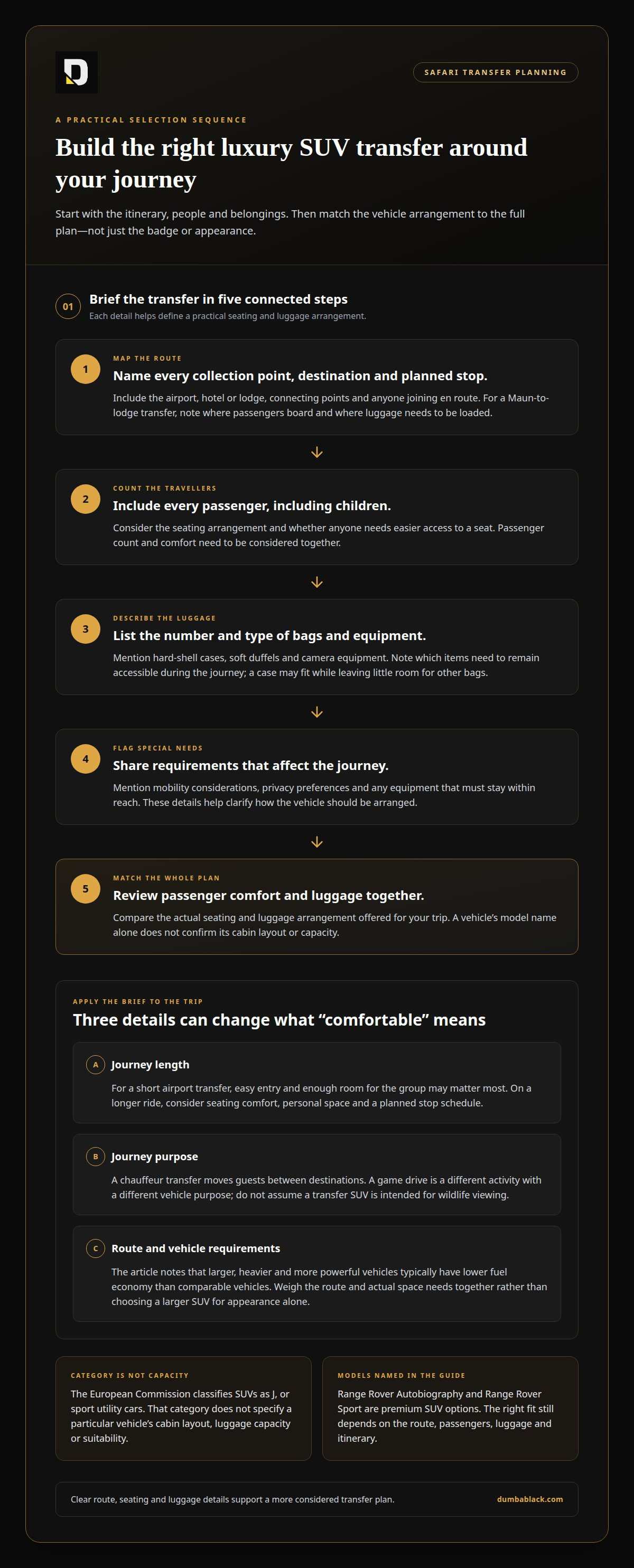
Map the itinerary before settling on a vehicle. A direct airport-to-lodge journey differs from a transfer with hotel stops, connecting flights, or several collection points. For travel between Maun and a lodge, for example, note where passengers will board, where luggage must be loaded, and whether anyone needs to join en route. Those details help define useful space and a practical seating arrangement.
Use this sequence to brief your transfer planner:
- Set the route. Name each collection point, destination, and planned stop, such as an airport, hotel, and lodge.
- Count travellers. Include every passenger, including children, and consider who may need easier access to a seat.
- Describe the luggage. Give the number and type of bags, such as hard-shell cases, soft duffels, or camera equipment.
- Identify special needs. Mention mobility considerations, privacy preferences, or equipment that must remain accessible during the ride.
- Match the vehicle to the full plan. Review passenger comfort and luggage arrangement together, not as separate decisions.
Luggage can determine whether an SUV feels comfortable or cramped. A case may fit in the boot but leave little room for other bags. A safari itinerary might involve a suitcase, a soft duffel and camera equipment. Describe each item and consider how often you will need access to it. Keeping essentials within reach can make a multi-stop transfer easier to manage.
Journey length also changes what comfort means. On a short airport transfer, easy entry and enough room for the group may matter most. On a longer ride, seating comfort, personal space and a well-planned stop schedule carry greater weight. A traveller arriving after an international flight, for example, may value a quiet, direct journey more than a larger cabin intended for several passengers.
Fuel use is another practical consideration, particularly on a long itinerary. The U.S. Environmental Protection Agency states that larger, heavier and more powerful vehicles typically have lower fuel economy than comparable vehicles. Compare the route and vehicle requirements together. Avoid choosing a larger SUV solely for its appearance if your group and luggage do not need the extra space.
Finally, distinguish a transfer from a game drive. A chauffeur transfer takes guests between destinations; a safari activity may involve a different vehicle and purpose. Do not assume that a luxury SUV arranged for airport or lodge transport is also intended for wildlife viewing. Identify the journey and destination before choosing your ride, and make sure the vehicle arrangement suits the transfer plan.
After a long flight, you may value a calm arrival, but the transfer plan should still account for everyone and their belongings. Confirm the seating arrangement, where bags will go and whether items needed during the journey can remain accessible. If the plan includes several collections or stops, clarify how boarding and loading will work at each point. This helps avoid assumptions based on a vehicle’s badge or exterior. Share any changes to passenger numbers, luggage or the route before travel, and confirm that the proposed arrangement still suits your needs. A clear brief gives the planner a practical basis for matching the vehicle to the itinerary and lets travellers raise concerns before departure. The European Commission’s vehicle-segment classification identifies SUVs as J, or sport utility cars. Treat this as a category, not a guarantee about a specific vehicle’s cabin or luggage arrangement. Before confirming, make sure the vehicle can accommodate your group and bags while supporting the planned stops. Ask for clarification about any details you are unsure of rather than relying on a model name. The aim is a comfortable, orderly transfer from collection to arrival, with the route, seating and luggage considered together. A well-defined plan can make a premium SUV a suitable choice without assuming that every SUV offers the same practical fit.
DUMBABLACK - The Spirit of Africa: Airport Transfers
DUMBABLACK - The Spirit of Africa provides Airport Transfers and Safari & Lodge Transfers for travellers planning an onward journey. These services suit itineraries that begin at an airport and continue to a lodge, or require a transfer between other travel points.
When arranging your journey, share your arrival details, destination, passenger group and luggage requirements. This helps align the transfer with your itinerary and the vehicle with your needs. Corporate Travel and Weddings & Events are also available for business itineraries and celebrations involving multiple travel points.
For a safari journey, provide the airport pickup and lodge destination together so the transfer plan reflects the full route. Contact DUMBABLACK - The Spirit of Africa, or visit dumbablack.com to discuss your travel arrangements.
Shape the Journey Around What Comes Next
A safari journey is part of a wider itinerary, not an isolated ride. Consider what happens before and after the lodge transfer, including your arrival plans, onward connections and scheduled commitments. A well-planned luxury SUV safari transfer should support the full journey, with arrangements that match how you intend to travel.
As your plans take shape, gather the essential details in one place: collection point, destination, passenger needs, luggage and any stops. This gives your transfer request a clear foundation and helps connect ground travel with the rest of your itinerary. DUMBABLACK, The Spirit of Africa, also provides Airport Transfers, Corporate Travel and Weddings & Events for different occasions.
Take the next step when your route is ready. Discuss your journey with DUMBABLACK - The Spirit of Africa, and move forward with a travel plan shaped around your priorities.
1 Follow DUMBABLACK - The Spirit of Africa on its official social media platforms.


