

The car is only one part of a wedding journey; the timing and route matter just as much. Chauffeur driven wedding car hire is arranged by selecting a vehicle suited to the couple and occasion, mapping the ceremony and reception journeys, and agreeing the booking duration and charges in advance. A clear itinerary helps the chauffeur coordinate each pickup and arrival.
A wedding day often involves several journeys, not just one transfer. The couple may need separate trips, time for photographs, and transport between the ceremony and reception. A well-planned itinerary brings these details together without unnecessary complexity.
This guide explains how to choose a wedding car, structure rides around the day’s schedule, and understand booking time, gratuity, and rental charges. You’ll also see which details to settle before booking, so the transport plan feels considered, comfortable, and well coordinated from the first pickup to the final arrival.
Key Takeaways
- Build one itinerary around ceremony arrivals, photography stops, and the reception transfer to keep the day’s journeys coordinated.
- Estimate the full booking window from the first pickup to the final planned ride, not just the drive between venues.
- Review how gratuity is handled and which charges are included before agreeing to a rental arrangement.
- Choose a vehicle based on passenger needs, luggage, comfort, and the style of the occasion.
- Explore DUMBABLACK - The Spirit of Africa’s Weddings & Events transportation for a professionally arranged wedding journey.
Wedding ceremony, photoshoot, and reception transportation
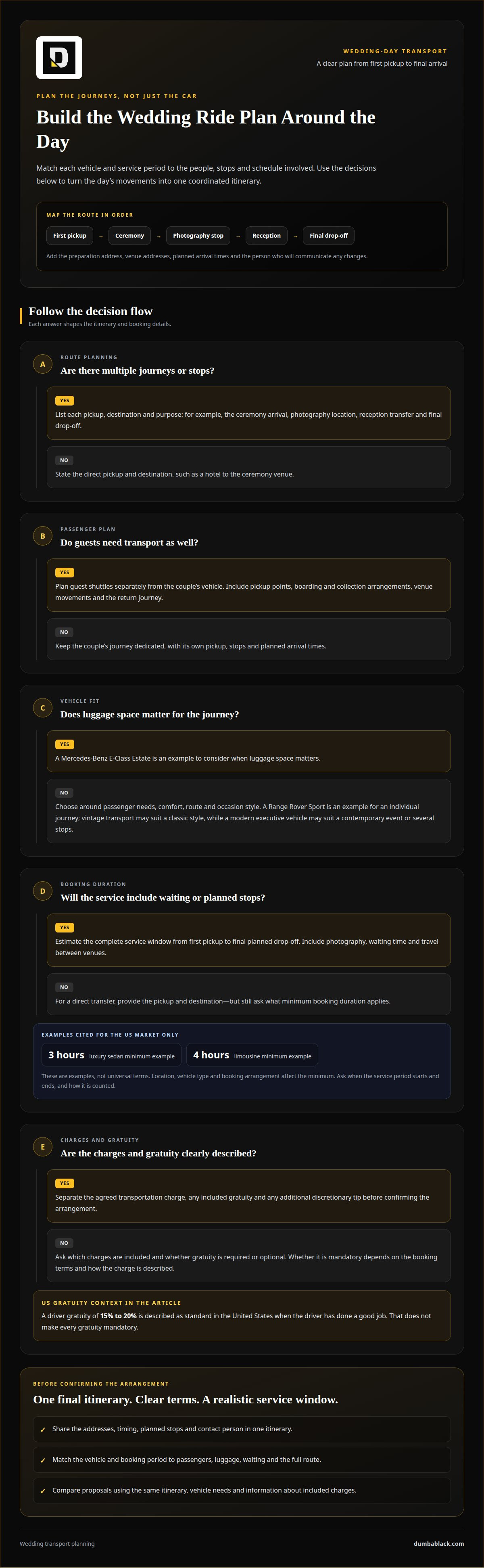
Plan wedding transportation around each journey’s purpose: the couple’s arrival, photographs, guest transfers, or the reception departure. One vehicle may cover the couple’s itinerary, while a separate shuttle plan can move guests between venues. For chauffeur driven wedding car hire, start with the schedule, then match the vehicle and service period to the journeys.
When comparing wedding transportation, use the same itinerary and vehicle requirements for each proposal. Look for specific information about punctuality, communication, vehicle condition, and how schedule changes are handled. Details about a wedding-day journey are more useful than a general compliment.
Map every pickup and destination before choosing a booking format. Include the preparation address, ceremony venue, photography location, reception venue, and final drop-off. If photographs are planned at a separate garden or hotel, include that stop in the route and schedule. Share venue addresses and planned arrival times in one itinerary, and identify who will communicate changes.
Keep the couple’s transportation separate from guest movements. A private car provides a dedicated journey for the couple, while group transport can serve guests travelling between a hotel, ceremony, and reception. Plan around the actual venue route and guest pickup points instead of assuming one arrangement suits every wedding. Include boarding, collection points, and the return journey in the itinerary. Give guests clear instructions on where to meet and when to board.
Chauffeur-driven vintage transportation can complement a classic or formal wedding style. Consider how the vehicle’s appearance fits the ceremony and photographs, then assess practical details such as entry, exit, and the couple’s attire. Styling is only one part of the decision: the vehicle must also suit the route and schedule. A modern executive vehicle may better suit a contemporary event or a journey with several stops.
Use this sequence to turn the plan into a clear booking request:
- List each journey. Name the passenger, pickup, destination, and purpose.
- Set the schedule. Include photography stops, venue arrivals, and guest shuttle movements.
- Match vehicle and service. Consider a Range Rover Sport for an individual journey or a Mercedes-Benz E-Class Estate when luggage space matters.
- Share one final itinerary. Give the chauffeur or coordinator the addresses, timing, and contact person.
This sequence helps distinguish a simple ceremony transfer from a full-day itinerary. Defining each journey also makes proposals easier to compare on consistent details.
Chauffeur service minimum booking duration
Book the wedding car once you know the date, venue, and approximate itinerary. There is no single advance-booking period that suits every wedding; the date, vehicle choice, route, and schedule all affect planning. Sharing those details early gives the booking a clear starting point.
A minimum booking duration is the shortest period for which a vehicle can be booked. It may exceed the driving time because the service can include pickup, waiting, and planned stops. A ceremony transfer followed by photographs and a reception arrival, for example, needs a different time plan from a direct journey.
US market examples show why the minimum varies by vehicle category. A luxury sedan may have a three-hour minimum, while limousine examples may require four hours. Treat these as examples, not universal terms: location, vehicle type, and the booking arrangement affect the minimum that applies.
To estimate the time needed, list the service from the first pickup to the final planned drop-off. Include the scheduled ceremony arrival, photography stops, and any waiting between locations. Then consider the route between each venue. A short drive with a long photography session may take more booked time than a longer, direct transfer.
- One direct trip: Give the pickup and destination, such as a hotel to the ceremony venue.
- Several wedding stops: Include the ceremony, photo location, and reception in sequence.
- Guest transport: Separate shuttle movements from the couple’s vehicle schedule.
Ask for the minimum duration and how the scheduled service period is counted. Clarify the planned start and finish points, including whether the booking begins at pickup or another agreed time. This makes it easier to compare arrangements using the same itinerary, rather than comparing a transfer with a longer event booking.
For chauffeur driven wedding car hire, allow time for the complete planned service, not just the estimated drive. A schedule that ends exactly at the reception arrival leaves no room for photographs or a change in sequence. Make the itinerary realistic and identify essential stops. If plans change, clear communication helps the chauffeur follow the updated sequence.
Book as soon as your date, venues, and transportation plan are established. The key step is to provide a complete itinerary and vehicle preference together, so the service period can be matched to the actual day. For a tailored wedding journey, explore wedding transportation planning.
Mandatory gratuity
A wedding chauffeur’s gratuity may be handled as an included charge or as a separate tip. In the United States, a driver gratuity of 15% to 20% is standard when the driver has done a good job. That practice does not make every gratuity mandatory. Whether it is required depends on the booking terms and how the charge is described.
Distinguish the agreed transportation charge from any included gratuity and an additional discretionary tip. If the booking terms list a required gratuity as a separate item, that differs from a tip left at your discretion after the service. Read the terms carefully instead of assuming every quoted total includes the same items.
Use a simple review sequence before signing:
- Find the gratuity clause. Look for terms such as “gratuity,” “driver tip,” or “service charge.”
- Identify how it is calculated. Check which part of the booking total the percentage applies to.
- Check whether it is already included. Compare the contract’s itemised charges with the final amount due.
- Keep a copy of the terms. Save the written agreement with your wedding itinerary.
The calculation basis matters. A percentage applied to the transportation charge can produce a different amount from one applied to a total that includes other charges. If the terms state a percentage but do not specify its basis, you cannot calculate the amount accurately from the percentage alone. Ask for a written breakdown before agreeing to the total.
Consider the chauffeur’s service when deciding on a discretionary tip. Examples of attentive service include following the agreed pickup sequence, communicating clearly about arrival, and assisting passengers courteously. If the chauffeur has done a good job, the 15% to 20% range provides a reference point for gratuity in the United States. It is not a substitute for checking whether a gratuity was already added.
For a wedding with several passengers or separate journeys, assign one person to review the payment terms. A planner, family member, or designated contact can keep the agreement accessible and help prevent duplicate tipping. For example, the couple can ask the planner to note any included gratuity in the transportation schedule, while the person handling payment follows the signed terms.
Keep the distinction clear: a required gratuity is governed by the booking terms, while an additional tip is discretionary. Record any included amount, its calculation basis, and who is responsible for payment. This helps avoid confusion after the wedding and ensures gratuity is handled deliberately.
Reviewing rental contracts and included charges
Review the agreement alongside the final itinerary. The terms should connect the vehicle, service period, payment arrangements, and response plan to the wedding schedule.
Insurance and Licensing
Ask what insurance applies to the booked journey and what the policy covers, including passengers and the vehicle. Review the service’s licensing documents against the rules for its operating location, since requirements differ by jurisdiction. For example, a wedding in Houston calls for checking the applicable local requirements, not assuming rules from another city apply. Keep copies of relevant documents with the signed agreement.
Delay or Unavailability Plans
Ask what happens if the assigned vehicle or chauffeur is delayed or unavailable, and have the answer recorded in writing. The agreement should explain who contacts the couple or planner, how a replacement arrangement is handled, and what remedies apply if the service cannot be delivered. Identify the event-day contact and how the pickup plan will be updated if the original vehicle cannot arrive.
Questions Before Booking
Ask which vehicle and chauffeur are assigned, what the service period covers, and how itinerary changes are handled. Clarify the full amount due, included charges, payment schedule, and cancellation terms. For example, ask whether a revised pickup time changes the booking period. Written answers make proposals easier to compare and reduce ambiguity on the wedding day.
Review each charge by its label and calculation basis. The agreement should distinguish the transportation charge from any gratuity or other included items. Check whether waiting, extra stops, or time beyond the scheduled service affect the total. A vague clause such as “additional charges may apply” gives little guidance; ask which conditions trigger extra costs and how they are calculated.
Review the cancellation and change terms, too. Note the process and deadlines for changing the route or cancelling, along with any stated refund or payment consequences. If the ceremony venue changes, for instance, the agreement should explain how route adjustments are handled. Keep the final itinerary and written amendments together so the planner and transportation contact work from the same version.
The price depends on the case and is given after a quote request; the vehicle, route, service duration, and itinerary determine the cost. Compare written proposals using the same journey details, rather than choosing by a headline total alone. Before signing, confirm that names, pickup points, dates, and the scheduled service period match the final wedding plan.
Choosing a vehicle type and passenger capacity
Start with the passenger list, then separate the couple’s journey from guest transport. A vehicle suited to the couple may not suit attendants, relatives, or luggage. Count who travels together on each leg, rather than counting everyone attending. This helps you choose for the practical journey, not just appearance.
Match the vehicle category to its role. A dedicated couple’s car prioritises privacy and a composed arrival, while group transport serves guests travelling together. The Business Class Mercedes-Benz E-Class Estate is an executive vehicle option with extra luggage capacity. Consider whether its format suits the couple’s journey, then compare its role with the other vehicles in your itinerary.
Capacity involves more than the number of seats. List each passenger, note who needs to travel together, and account for personal items such as bouquets, garment bags, or gifts. A couple carrying wedding attire may need a different arrangement from guests making a short transfer. Share the full passenger and luggage plan when booking, so the vehicle suits the actual journey.
Use this sequence to assess the fit:
- Separate passenger groups. Identify the couple, attendants, family members, and guests who need transport.
- Map each journey. Match each group to a pickup, destination, and scheduled leg.
- Account for belongings. Include dresses, bouquets, personal bags, and other items travelling in the vehicle.
- Compare vehicle roles. Select a dedicated couple’s car or a suitable arrangement for group movements.
Consider how passengers will enter and exit in formal clothing. A full wedding dress or fitted suit, for example, can make boarding less straightforward. Describe the planned attire and any mobility needs when discussing the journey. A vehicle’s exterior may suit the photographs, but comfort and practical access should guide the final choice.
Route and venue details also shape the decision. A ceremony and reception close together may call for a different plan from separate venues and a longer photography stop. Share the locations and planned sequence, then decide whether one vehicle can cover the couple’s journeys or guest transport needs a separate arrangement. Align the vehicle choice with the itinerary, not just the ceremony entrance.
For a considered vehicle match, provide the passenger groups, luggage needs, route, and occasion details when arranging wedding transportation. A clear brief makes it easier to align vehicle type with passenger capacity and the purpose of each journey.
DUMBABLACK - The Spirit of Africa: Airport Transfers
DUMBABLACK, The Spirit of Africa, provides Airport Transfers for wedding couples and guests travelling to celebrations. Coordinating an airport pickup with ceremony and reception travel can bring arrival transport into the wider itinerary.
A couple arriving by air can plan an airport transfer alongside its wedding transportation. Guests arriving separately may need their own pickup arrangements. DUMBABLACK also provides Weddings & Events transportation, as well as Corporate Travel and Safari & Lodge Transfers for other travel needs.
Share arrival details and onward destinations when arranging transportation, so the journey fits the occasion and schedule. Contact DUMBABLACK, The Spirit of Africa, or visit dumbablack.com to discuss your plans.
Set the journey in motion
Make transportation part of the day’s overall coordination. A shared point of contact can keep the wedding party, planner, and chauffeur aligned as the celebration unfolds. With a clear brief, chauffeur driven wedding car hire can support the atmosphere you want while keeping each arrival purposeful.
Choose the details that matter most to you, then bring them together in one final plan. Contact DUMBABLACK - The Spirit of Africa to discuss your wedding transport requirements and take the next step towards a composed, thoughtfully planned celebration.
Frequently Asked Questions
How do you rent a luxury car for an event?
Start by deciding what the vehicle needs to do beyond reaching the venue. Consider the event’s formality, the passenger’s preferred arrival style, and whether the car will feature in photographs. Then submit a booking enquiry with the event date and intended use. Keep the confirmation accessible to the event organiser, so the person coordinating arrivals can refer to the same details.
What chauffeur-driven wedding car options are available near me?
Available options depend on the service area and your travel needs. DUMBABLACK offers chauffeur-driven sedans, SUVs, and a passenger van. For example, the BMW 7 Series has massage seats and a panoramic roof, while the Range Rover Sport has 4×4 capability. These differences can help guide your choice if your priorities include a distinctive arrival or a vehicle suited to varied terrain.
What is included in a wedding car hire package?
Package details vary, so request a written description before deciding. DUMBABLACK’s Airport Transfers include meet-and-greet, flight tracking, and complimentary waiting time. These features may be useful when a couple or guest is travelling in for the celebration. For other event journeys, use the written booking details to distinguish the agreed service from any additional arrangements.
How do wedding car hire companies charge for time, mileage, and waiting?
Confirm the booking format before comparing proposals. DUMBABLACK offers one-way, return, and by-the-hour options. A one-way booking may suit a single arrival, while a return booking can cover a planned departure. If your schedule might change, ask how the selected format handles additional time or distance, and keep the answer with your booking confirmation.
What types of vehicles are popular for wedding transportation?
Executive sedans, SUVs, and passenger vans suit different travel needs. The Mercedes-Benz S-Class, for example, has reclining rear seats and a privacy partition. The Range Rover Autobiography features an executive rear cabin and all-terrain capability. The Mercedes-Benz V-Class has conference seating and workstation tables. Consider which features suit the journey and occasion, then choose a vehicle category that reflects those priorities.
What should I check in a wedding car hire contract and cancellation policy?
Consider different types of plan changes, rather than reviewing cancellation as one scenario. Ask how the terms distinguish a date change, a venue change, and cancellation. Clarify how to submit a change and how the revised arrangement will be documented. Keep the final confirmation so everyone involved refers to the same agreed service.
Can a chauffeur-driven wedding car accommodate the wedding dress, bridal party, or accessibility needs?
It can, if the selected vehicle suits the passengers and their practical needs. Before booking, describe the dress, any mobility considerations, and how passengers will enter or exit. A voluminous gown, for example, may need more room than a simple outfit. Ask whether the proposed vehicle’s seating and access arrangement suits those details, rather than relying on its exterior appearance.
Social media: Follow DUMBABLACK through its official social media channels.


