

A long-distance chauffeur journey works best when the itinerary plans for pauses, not just mileage. Effective multi-day private chauffeur itinerary planning sets a realistic route for each day, schedules meal and rest stops, and allows time for traffic or changes. It also coordinates each day’s finish with the overnight stay and the vehicle needed for passengers and luggage.
It’s easy to focus on arrival times and overlook how a full day on the road feels. A thoughtful schedule leaves room for meetings, sightseeing, and changing conditions without making every stop feel rushed. This guide explains how to plan driving time, useful breaks, contingency, bookings, and overnight stays in sequence. It also covers vehicle considerations, from passenger space to luggage capacity, so the plan supports comfort and continuity throughout the trip.
Key Takeaways
- Build the daily route around realistic driving periods, planned stops, transitions, and room for delays.
- Arrange the journey early enough to coordinate vehicle, chauffeur, accommodation, and schedule details.
- Keep each day’s itinerary clear, with pickup points, destinations, and overnight arrangements aligned.
- Choose rest stops and overnight stays that support a comfortable pace and convenient departure the next day.
- Match the vehicle to passenger numbers, luggage, and the level of comfort required for the journey.
Building drive, stop, transition, and buffer time into an itinerary
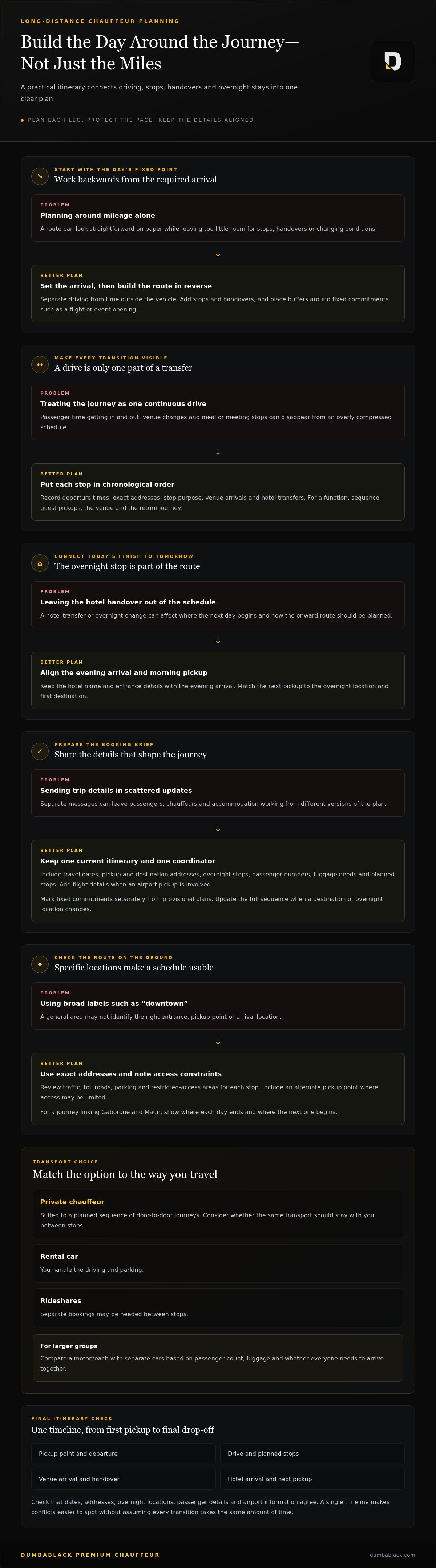
Build each travel day around the required arrival time, then work backward through driving, stops, and handovers. For a city-to-city trip, record every address and allow the schedule to accommodate traffic or a longer visit.
Drive and Buffer Time
Start with the route between each named pickup point and destination, then separate driving from time spent outside the vehicle. A meeting in Gaborone, for example, may need a different departure plan from a relaxed hotel transfer. Add buffers around fixed commitments, such as a flight or event opening, rather than compressing the entire day.
Compare private chauffeur travel, rental cars, and rideshares by considering who drives, how stops work, and whether the same transport stays with you. A chauffeur suits a planned sequence of door-to-door journeys. With a rental car, you handle the driving and parking, while rideshares may require separate bookings between stops.
Stops and Hotel Transfers
List every departure time, address, planned stop, and hotel transfer in chronological order. Note the purpose of each stop, such as lunch, a meeting, or a change of venue. For a private function across several locations, sequence guest pickups, the ceremony or reception venue, and the return journey. Keep the next hotel’s name and entrance details alongside the evening arrival.
For a multi-day booking, align the morning pickup with the overnight location and first destination. For a hotel transfer, identify the property and intended arrival point. Gratuity customs vary by destination, so there is no universal customary amount for a multi-day chauffeur. Follow local practice and use your judgment about the service received.
Local Transportation Logistics
For a theme park visit, put the hotel, destination, and agreed pickup point in the schedule. Allow time for passengers to get in and out at each location instead of treating the drive as the entire transfer. For other city-to-city journeys, list exact departure and arrival addresses. “Downtown” alone is too broad for a precise itinerary.
Traffic, toll roads, parking arrangements, and restricted-access areas can affect route choice and arrival times. Review these for each stop and venue, and include an alternate pickup point where access may be limited. For larger groups, compare a motorcoach with separate cars based on passenger count, luggage, and whether everyone needs to arrive together.
Before finalising the route, put every commitment on one timeline: pickup, drive, stop, venue arrival, and hotel handover. This reveals conflicts and gives the itinerary a practical structure without assuming every transition will take the same amount of time.
Booking lead time for long-distance trips
Begin arranging transport once the route, travel dates, and overnight locations take shape. Good multi-day private chauffeur itinerary planning starts before every optional detail is settled. A journey linking Gaborone, Maun, and a lodge needs more coordination than a single city transfer. Early preparation gives you time to align destinations, passenger requirements, luggage, and fixed commitments. The route’s complexity and travel dates matter more than any universal booking interval.
Set the route before requesting a booking
Prepare a working itinerary before arranging transport. Include each travel date, departure address, destination, overnight stop, and fixed appointment. For example, a business visit in Gaborone followed by travel to Maun should show where the first day ends and the next begins. This helps define the transport required for the complete journey, rather than treating each leg as an unrelated transfer.
Separate confirmed arrangements from provisional plans. Mark a meeting time or hotel check-in as fixed if it cannot move. List flexible stops, such as a meal or optional visit, separately. If a destination changes, revise the full sequence, not just the final address. A different overnight location can affect the following day’s departure point and route.
Share the details that shape the booking
Provide passenger numbers, luggage needs, pickup locations, and planned stops with your initial request. Include flight details if an airport pickup is part of the journey. If a group will travel from the airport to a hotel, share the arrival information and onward destination together. This gives the coordinator a clearer picture of the schedule and vehicle requirements for each leg.
For corporate travel, identify who will coordinate changes and receive updates. One itinerary owner can keep the chauffeur, passengers, and accommodation details aligned. For a private trip, include the lead traveller’s contact details and preferred communication method. Keep updates in one current itinerary instead of scattering revised addresses across separate messages.
Allow time for decisions and revisions
Long-distance plans can evolve as meetings, flights, or accommodation are finalised. Begin arranging transport when the central details are available, then provide updates as plans change. Don’t wait for every optional stop to be settled before preparing the route. A draft can establish the main journey while clearly marking unresolved destinations or timings.
Before confirming the schedule, review the route from the first pickup through the final drop-off. Check that dates, addresses, overnight locations, passenger details, and airport information agree. This review may reveal a mismatched hotel transfer or an address copied from an earlier version. To discuss your route and requirements, share your long-distance travel requirements for a quotation.
Multi-day chauffeur bookings and itinerary coordination
A coordinated booking aligns the route, service terms, and communication process. For multi-day private chauffeur itinerary planning, keep these elements in one agreed operating brief.
Assess passenger-transport insurance, applicable operating authorisation, driver qualifications, and vehicle maintenance records. Requirements vary by jurisdiction, so consider the countries on your planned route when reviewing credentials.
Charges may depend on route, vehicle, service duration, mileage, waiting time, and agreed overtime. The price depends on the specific journey and is provided after a quote request. Compare how the proposed terms treat each charge and any additional stops.
For delays or changes, notify the booking coordinator with the revised time, location, or stop. The coordinator can update the journey details and explain how the adjustment affects the arrangement. Prompt notice helps keep the agreed schedule current.
Pricing and Time Charges
This part covers the charging basis and how extra time or distance is handled. Review whether the quote uses mileage, booked hours, or a defined schedule. A route between Gaborone and Maun differs from several local transfers arranged within the same booking.
Check how the terms account for waiting at a meeting, hotel, or airport, and when overtime applies. Ask for the planned route and included stops to be clearly stated. Compare added mileage or an extra stop with the original terms. A clear breakdown helps travel coordinators reconcile each day’s journey.
Itinerary Changes and Delays
Agree on one person to communicate schedule changes, then share that contact with passengers and the booking coordinator. If a meeting in Gaborone runs late, send the revised finish time and next destination together. This allows the remaining sequence to be reviewed as a whole, rather than changing one pickup while leaving later arrangements untouched.
For an added stop, provide its address, purpose, and preferred timing. Collecting a document, for example, may affect the next hotel arrival. If a flight is delayed, share updated arrival information through the agreed channel. Keep one current itinerary and circulate revisions to the relevant travellers so everyone follows the same plan.
Before departure, record how to communicate updates, waiting changes, and route adjustments. Keep the coordinator’s contact details beside the schedule. After a change, review the remaining pickups and destinations, then share the revised version. This gives passengers and coordinators a shared reference throughout the journey and reduces uncertainty when plans shift.
Rest stops and accommodations for extended journeys
Plan overnight accommodation around natural stopping points on the route, not just the final destination. Identify where each day will end before setting the next morning’s departure. This connects the accommodation location to the planned route and avoids scheduling an early pickup from a distant property.
Choose rest stops for a clear purpose: a meal, restroom break, passenger reset, or change of plans. Place each stop near the route, considering how any detour could affect later arrivals. If a business appointment follows lunch, for example, allow enough time to park, leave the vehicle, and reach the meeting location.
Coordinate accommodation details with the transport schedule. Record the property name, full address, booking name, and preferred vehicle entrance in the itinerary. A city hotel and a safari lodge may have different arrival procedures, so specify the right drop-off point for each. Share any late-arrival or luggage-handling requirements with the person coordinating the stay.
Use a simple overnight checklist for each stop:
- Arrival: Match the planned drop-off time to the property’s check-in arrangements.
- Departure: Set the next pickup from the correct entrance and confirm the first destination.
- Luggage: Keep essential items accessible for the overnight stay, especially when larger bags remain packed.
- Meals and breaks: Identify a suitable stop before the day’s final leg, rather than relying on an unplanned pause.
For a lodge stay, align the arrival plan with the lodge’s location and the day’s remaining activities. Avoid scheduling a late excursion immediately before a lengthy transfer unless the itinerary allows a proper pause. For a hotel-to-hotel journey, group stops by geography so the vehicle does not repeatedly cross the same area.
Keep the overnight plan usable when arrangements change. If accommodation moves from a central hotel to a property outside the city, revise the following morning’s pickup and route together. Send the updated address to everyone using the itinerary. One current version reduces confusion among travellers, accommodation staff, and the transport coordinator.
Finally, review the day’s rhythm from departure through arrival. Check that meal breaks, planned stops, hotel check-in, and the next morning’s pickup form a coherent sequence. For journeys involving city stays and remote lodges, list each overnight location separately and keep its arrival instructions beside that day’s route.
Selecting a vehicle for passenger capacity, comfort, and storage
Choose the vehicle after listing passengers, luggage, and the journey’s purpose. A business visit between Gaborone and Maun may require a different arrangement from a family holiday with several bags. Count every traveller, include child seats or mobility equipment where needed, and consider whether passengers will carry items into the vehicle during the day.
Passenger capacity is only one consideration. The group needs room to sit comfortably with luggage loaded, without bags taking up passenger space or blocking access. A sedan may suit a small executive party with compact luggage, while several travellers with larger cases may need a different vehicle category. Match the vehicle to the actual group and baggage, not passenger count alone.
Comfort also depends on the journey pattern. A vehicle used for consecutive long-distance legs should suit passengers’ seating preferences and the formality of the trip. The Business Class Mercedes-Benz E-Class Estate is one option for a journey that calls for an estate vehicle. Assess it against the passenger group, luggage, and planned stops rather than assuming one model suits every itinerary.
Before choosing, prepare a practical inventory:
- Passengers: Record who will travel on every leg, including anyone joining later.
- Luggage: Note the number and type of bags, such as suitcases, work cases, or equipment.
- Journey pattern: Identify long drives, repeated hotel transfers, and frequent entry or exit.
- Special requirements: Include mobility needs, child seats, or items that must remain accessible.
That inventory can reveal changing needs along the route. One traveller may join at the start while another leaves later, so the vehicle plan should reflect each leg. For a corporate itinerary, keep presentation materials within reach and luggage secure during transfers. For a leisure journey, consider whether passengers need space for day bags separate from overnight cases.
Confirm the vehicle choice against the complete itinerary, not just the first pickup. A car that suits a hotel-to-meeting transfer may be less practical for an airport arrival with several cases. Share passenger and luggage details when arranging the journey, then request a suitable vehicle for the route. Request a vehicle suited to your itinerary.
DUMBABLACK - The Spirit of Africa: Airport Transfers
DUMBABLACK - The Spirit of Africa can coordinate Airport Transfers as part of travel that begins or ends at an airport. This is a natural next step when your itinerary connects an arrival or departure with hotel, business, or lodge journeys.
For corporate schedules, Corporate Travel supports planned executive transportation. Safari & Lodge Transfers connect airport journeys with accommodation outside city centres. Weddings & Events can also involve transport between multiple locations, making clear pickup details useful from the outset.
Share your arrival details, destination, passenger requirements, and onward plans when arranging transportation. These details help shape a journey around your itinerary rather than treating the airport transfer as an isolated trip.
Contact DUMBABLACK - The Spirit of Africa or visit dumbablack.com to discuss your travel arrangements.
Turn the route into a travel brief
Before booking, shape the itinerary into a concise travel brief that reflects how you want each day to feel. Note your priorities, whether that means a calm arrival before a meeting, privacy during corporate travel, or a considered transition from airport to lodge. This gives the transportation plan a clear purpose beyond reaching each destination.
Thoughtful multi-day private chauffeur itinerary planning also leaves room for the character of the trip. A business programme, wedding schedule, and safari stay each call for a different rhythm. DUMBABLACK - The Spirit of Africa offers Airport Transfers, Corporate Travel, and Weddings & Events for distinct travel needs.
Let the next step be a clear conversation about your route and priorities. Contact DUMBABLACK - The Spirit of Africa to discuss your journey, then move forward with a plan shaped around the experience you want.
Frequently Asked Questions
What information is needed to plan a multi-day private chauffeur itinerary?
Alongside route details, provide the booking contact, the person authorised to approve changes, and any billing reference required by your organisation. Note communication preferences, including whether updates should go to an assistant or directly to each traveller. If the trip includes a formal event, share its name and relevant arrival instructions. These details help coordinate decisions without circulating sensitive travel information more widely than necessary.
How far in advance should a private chauffeur be booked for a multi-day trip?
There is no single lead time that suits every journey. The right timing depends on route complexity, how firmly the travel dates are set, and whether the trip coincides with a major event or busy travel period. Start with firm commitments, such as an event date or flight, then arrange transport around them. This gives the plan a stable foundation while flexible activities remain under consideration.
What vehicle size and amenities are best for a multi-day private chauffeur trip?
Select a vehicle that suits passengers’ comfort preferences and the journey’s practical demands. Consider ease of entry and exit, privacy requirements, and whether anyone needs a child seat or mobility accommodation. Tell the coordinator which features matter most instead of assuming every vehicle offers the same amenities. A clear priority list helps distinguish essential requirements from preferences when comparing suitable options.
What are the rules for driver hours, rest breaks, and overnight accommodations?
Driver-hour limits and rest requirements depend on the regulations that apply to the service and route. A journey crossing borders may pass through jurisdictions with different requirements, so don’t assume one country’s rules apply throughout. The itinerary should account for applicable limits when setting daily travel plans. Treat the chauffeur’s lodging as a separate operational consideration from passenger accommodation and include it in trip coordination.
What local traffic, toll, parking, and access restrictions affect chauffeur itineraries?
Traffic, toll roads, parking arrangements, and restricted-access areas can affect route choice and arrival times. Review them for each stop and venue, and include an alternate pickup point where access may be limited.


