

Airport transfers depend on the arrangements made before pickup. A chauffeur-driven luxury car rental combines a suitable vehicle with a professional chauffeur, a clear meeting plan and a route tailored to the journey. It offers a considered alternative to managing an unfamiliar arrival on your own.
A smooth transfer means knowing where pickup will take place, travelling comfortably and continuing to a hotel, meeting or private destination without having to drive. Corporate journeys also call for discretion, clear coordination and a vehicle suited to the passenger and occasion.
This guide explains how airport chauffeur services work, what to consider when choosing a vehicle and how route planning can support an orderly journey. It also covers professional service, corporate travel needs and practical details for coordinating pickup with your itinerary. Whether you are arranging your own arrival or transportation for an executive guest, these points help you plan with clarity.
Key Takeaways
- Share your flight and destination details clearly so the airport pickup can be coordinated around your itinerary.
- For corporate journeys, plan transport around meeting schedules, privacy needs and any onward stops.
- Choose a vehicle based on passenger comfort, luggage and the nature of the journey.
- A professional chauffeur can support a composed transfer through attentive service and considered route planning.
- Review the pickup point and route plan in advance to make arrival arrangements clearer.
Airport transfers
An airport transfer connects an arrival or departure with a chosen destination in a prearranged vehicle with a chauffeur. A chauffeur-driven luxury car rental can suit solo travellers, executive guests and families who prefer to have pickup arranged before landing.
Plan around the complete journey, not just the flight. For example, an arrival may call for a direct hotel transfer or a connection to a lodge itinerary. The pickup point, passenger count, luggage and destination all shape the arrangement.
Airport Transfer Arrangements
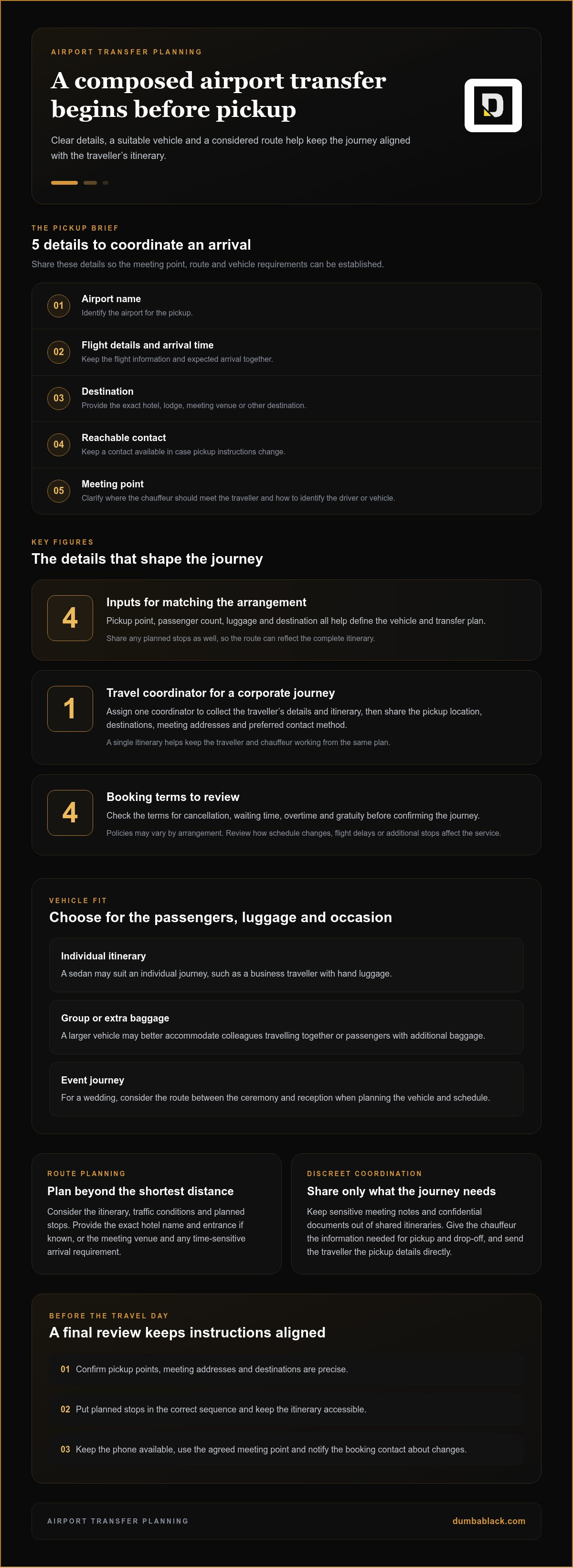
When arranging a pickup, provide the airport name, flight details, arrival time, destination and a reachable contact. Specify whether the journey is for an arrival or departure, and note any stops. These details help establish the meeting point, route and vehicle requirements, including space for passengers and luggage.
For a departure, share the pickup address and planned departure time. For an arrival, clarify where the chauffeur should meet the traveller and how they can identify the vehicle or driver. Keep the itinerary and contact details together, particularly when an assistant is coordinating travel for an executive.
Are chauffeur-driven luxury car rentals suitable for airport transfers, weddings and corporate travel? Yes. Airport journeys connect travellers with terminals and destinations, wedding bookings support event transportation, and corporate bookings accommodate business itineraries.
Booking and Payment Requirements
Age, identification, booking and payment requirements depend on the country, booking arrangement and passenger circumstances. Provide the lead traveller’s name, contact details and itinerary, then follow the booking terms for identification and payment instructions. If a minor is travelling without a parent, include the responsible adult’s details in the travel plan.
For a corporate reservation, provide the organisation’s billing contact and the person coordinating the journey. For a personal booking, use the passenger’s own details. Keep the confirmation accessible so the traveller can refer to the pickup instructions and agreed destination.
Cancellation, waiting-time, overtime and gratuity policies are set out in the booking terms and may vary by arrangement. Read them before finalising the journey, especially to understand how schedule changes, flight delays or additional stops affect the service.
Plan the route around the pickup and final destination. Consider the itinerary, traffic conditions and any planned stops rather than relying only on the shortest distance shown on a map. For an airport-to-hotel journey, provide the exact hotel name and entrance if known. For a meeting transfer, share the venue and any time-sensitive arrival requirement.
Passengers can help make pickup more orderly by keeping their phones available, identifying the agreed meeting point and notifying the booking contact about itinerary changes. A corporate assistant arranging travel for a guest should send the pickup details directly to the traveller. Clear instructions reduce confusion at a busy terminal and help the chauffeur follow the intended route.
Before booking, match the vehicle to the passenger count, luggage and occasion. A business traveller with hand luggage may have different needs from a family travelling with several cases. For a wedding, consider the route between the ceremony and reception. These practical details help shape a transfer that fits the day’s schedule.
Business and corporate travel
Corporate journeys work best when transportation follows the business itinerary. An executive may need an airport transfer to a hotel, followed by onward travel to a meeting venue. A well-considered plan accounts for every stop, passenger and schedule change.
Start by assigning one travel coordinator to collect the traveller’s details and itinerary. That person can share the pickup location, destination, meeting addresses, and preferred contact method with the chauffeur. For an international guest arriving in Maun, include the hotel or lodge name and any onward appointment. A single itinerary reduces conflicting instructions.
Choose a vehicle to suit the purpose of the journey. A private transfer for one executive differs from transportation for colleagues attending the same meeting. Consider passenger numbers, luggage, clothing or presentation materials, and time spent travelling between appointments. A sedan may suit an individual itinerary, while a larger vehicle may better accommodate a group or extra baggage.
For a schedule with several meetings, map the sequence before the travel day. Where practical, group destinations by location and give the chauffeur each address in order. If a meeting moves, the coordinator should send the revised destination and timing through the agreed communication channel. This keeps the passenger and chauffeur working from the same plan.
Corporate travel arrangements also benefit from separating passenger information from billing details. Record the traveller’s name and pickup instructions alongside the itinerary, and keep the organisation’s booking contact and payment details with the coordinator. For a visiting delegation, prepare a plan for each passenger, then combine shared journeys when destinations and schedules align.
Executives often value privacy during transit. Do not include sensitive meeting notes or confidential documents in a shared itinerary. Provide only the information needed for each pickup and drop-off. For example, an assistant can share a guest’s name and destination without circulating the meeting’s purpose. Clear, limited instructions support discreet service.
Before confirming a corporate journey, review the itinerary from the traveller’s perspective. Check that pickup points are precise, meeting addresses are complete, and any planned stops appear in the right sequence. A chauffeur-driven journey can then support airport arrivals, scheduled meetings, and onward hotel transfers as one coordinated plan. This approach gives travel managers a practical structure for arranging business mobility across Gaborone, Maun, and other destinations.
Luxury vehicle options
Choose a vehicle by matching the occasion to passenger space, luggage, route and formality. A private airport arrival, a countryside visit near Maun and a formal event each create different practical needs.
What should a chauffeur-driven luxury car rental quote include? It should identify the vehicle, chauffeur service, journey schedule and quoted price, with relevant journey details itemised. The price depends on the itinerary, vehicle, duration, route and requested stops.
How far ahead should you book a chauffeur-driven luxury car? Arrange it once your date, itinerary and vehicle preference are clear. Booking earlier gives you more time to coordinate those details, especially for a specific model or a multi-stop occasion.
For a formal arrival or private occasion, consider how the vehicle suits the setting. A Range Rover Autobiography or Range Rover Sport may suit travellers who prefer an SUV. For a wedding, choose a vehicle that fits the route between the ceremony and reception, and coordinate pickup with the event schedule.
The Mercedes-Benz E-Class Estate offers a different option for journeys involving luggage or equipment. For example, a guest arriving with presentation materials may appreciate the estate format alongside passenger seating. Choose a vehicle based on the actual load rather than assuming every executive journey calls for the same style of sedan.
Before choosing, note the details that affect the fit:
- Passengers: Include every traveller, such as an executive and accompanying colleague.
- Luggage: Note cases, garment bags or event materials.
- Route: Distinguish a city transfer from a longer journey beyond Gaborone.
- Occasion: Identify whether the booking serves business, a wedding or leisure travel.
These points help clarify the vehicle category before you discuss a specific model. A couple attending a wedding may prioritise presentation, while a traveller carrying several cases may focus on luggage capacity. A trip combining airport pickup and a lodge transfer may call for a different choice from a short city journey.
Ask for a quote based on the actual plan. Provide the pickup and destination, travel date, expected duration, stops and passenger requirements. If the itinerary changes, update those details before confirming. This helps keep the proposed vehicle and journey aligned.
In Botswana, a Gaborone meeting schedule and a Maun leisure itinerary may call for different vehicle priorities. Compare the route, number of passengers and luggage first, then choose the model that serves the occasion with appropriate comfort and presentation.
Professional chauffeur service
A professional chauffeur contributes more than driving between two addresses. The service is arranged around a passenger, itinerary and vehicle, with attention to pickup instructions, conduct and route changes. For example, a traveller attending a Gaborone meeting can share the venue and timing before departure.
How do chauffeur-driven luxury car services compare with rideshare and traditional car rental? A chauffeur service pairs a dedicated driver with a planned journey, while rideshare usually centres on individual trip requests. With traditional car rental, the customer generally drives and handles navigation.
The difference matters when the day includes several stops. A chauffeur can follow a planned sequence from an airport to a hotel, then to a meeting venue. A rideshare passenger arranges each trip separately, while someone renting a car for self-drive handles directions, parking and the return journey.
Professional conduct shows in practical details. A chauffeur confirms the passenger’s name and destination, follows the agreed pickup instructions and communicates calmly if plans change. For a visiting executive, discretion also means discussing only journey-related details and avoiding unnecessary conversation about private business.
Before travelling, provide the information the chauffeur needs to prepare for the assignment:
- Pickup: Give the exact address, entrance or agreed meeting point.
- Itinerary: Share destinations in sequence, including scheduled stops.
- Passenger needs: Note luggage, mobility considerations or event attire.
- Contact: Identify the person coordinating changes during the journey.
For a wedding in Maun, for instance, the itinerary may connect a hotel, ceremony venue and reception. The passenger or organiser should communicate those locations clearly. A business traveller with a meeting in Gaborone can provide the venue name and any onward destination, helping the chauffeur follow the intended plan.
A chauffeur-driven journey separates driving from the passenger’s other responsibilities. Passengers can prepare for a meeting, review notes or focus on the day instead of managing the wheel and route. This can be useful after a long flight or between appointments.
Choose the arrangement that fits your role and schedule. Rideshare can suit a single point-to-point request. Self-drive rental suits travellers who want to drive themselves. A professional chauffeur service is for passengers who prefer a driver and a coordinated itinerary. For a multi-stop visit, provide the full schedule and name one contact for updates before the journey begins.
Safety and route planning
A well-planned journey considers the route, pickup details, passenger needs and changing conditions. For travel between Gaborone and Maun, provide the exact destinations and planned stops before departure. That gives the chauffeur a clear itinerary to follow and helps identify practical route decisions.
What insurance and liability coverage applies to chauffeur-driven luxury car rentals? Coverage and liability depend on the applicable insurance policy and booking terms, rather than a universal standard. Review how the terms address vehicle damage, third-party claims, passenger injury, exclusions, excess and personal belongings.
Start route planning with the destination and purpose of travel. A direct airport-to-hotel journey differs from a day with several business appointments. Share each stop in sequence, provide accurate addresses and identify any timing constraints. For a wedding, include the ceremony and reception locations so the route reflects the full occasion.
Use a practical pre-journey sequence:
- Confirm the itinerary: Match pickup, destinations and stops to the latest schedule.
- Share relevant needs: Note luggage, mobility considerations or a passenger requiring assistance.
- Review the route: Discuss preferred destinations and any planned detours with the chauffeur.
- Agree on updates: Identify one contact for communicating changes during travel.
For a cross-border itinerary involving Botswana and South Africa, Namibia, Zambia or Zimbabwe, treat border crossings as distinct route-planning points. Share the intended crossing and destination sequence with the travel coordinator. Keep journey details consistent across the passenger’s itinerary and transportation instructions. Travel documents and entry requirements should be handled separately as part of the traveller’s preparations.
Safety also depends on clear communication. If a meeting address changes in Gaborone, send the revised location through the agreed contact rather than relying on an informal message passed between passengers. For an arrival in Maun followed by onward travel, ensure the passenger knows the pickup point and has the coordinator’s contact details.
Vehicle suitability supports the plan. A Range Rover Autobiography or Range Rover Sport may suit a journey where an SUV is preferred, while a Mercedes-Benz E-Class Estate may work well for travel involving luggage or equipment. Choose based on the itinerary and passenger requirements, not appearance alone.
Before confirming your route, set out the destination, stops, passenger needs and communication contact in one itinerary. For a journey requiring a professional driver and considered route coordination, request a chauffeur journey.
DUMBABLACK - The Spirit of Africa: Airport Transfers
DUMBABLACK - The Spirit of Africa provides airport transfers for travellers arranging a chauffeured journey between an airport and their destination. Share your flight details, pickup point, destination and luggage requirements when planning the transfer.
For executive schedules, Corporate Travel can coordinate transportation around business appointments. Weddings & Events and Safari & Lodge Transfers serve other occasions, from venue journeys to lodge itineraries. Choose the service that suits your plans and provide the relevant journey details.
To discuss an airport transfer or another suitable journey, contact DUMBABLACK - The Spirit of Africa at [email protected].
Social media: Follow DUMBABLACK - The Spirit of Africa on its official social media channels.
Plan the Journey Around the Occasion
Let the occasion shape your transportation arrangements. A clear plan accounts for the passenger’s priorities, schedule and preferred travel experience. Chauffeur-driven luxury car rental offers a considered option for travellers who prefer a professional driver to manage the journey.
Before arranging your trip, gather the essentials: the date, pickup and destination, passenger requirements and timing considerations. A concise itinerary gives the booking conversation a practical starting point and helps align the journey with your plans.
When you’re ready to discuss your requirements, contact DUMBABLACK - The Spirit of Africa. Take the next step at your own pace and plan a journey that suits the occasion.
Frequently Asked Questions
Which luxury vehicles can be rented with a professional chauffeur?
Chauffeur-driven options include executive sedans, luxury SUVs, estates and passenger vans. The available range includes the Mercedes-Benz S-Class, BMW 7 Series, Mercedes-Benz E-Class, Mercedes-Benz E-Class Estate, Mercedes-Benz V-Class, Range Rover Autobiography and Range Rover Sport. For a formal arrival, an executive sedan may suit the occasion; a V-Class can better accommodate a group. Match the vehicle to passengers, luggage and the journey’s purpose.
How can customers verify a chauffeur service's licensing, safety record, and reviews?
Check licensing through the relevant official transport authority or public register for the jurisdiction where the journey takes place. Review the service’s written insurance and safety information, then compare independent customer reviews across platforms. Look for specific, consistent comments about punctuality, vehicle condition and chauffeur conduct instead of relying on a single rating. For cross-border travel, assess requirements separately for each country on the itinerary.


